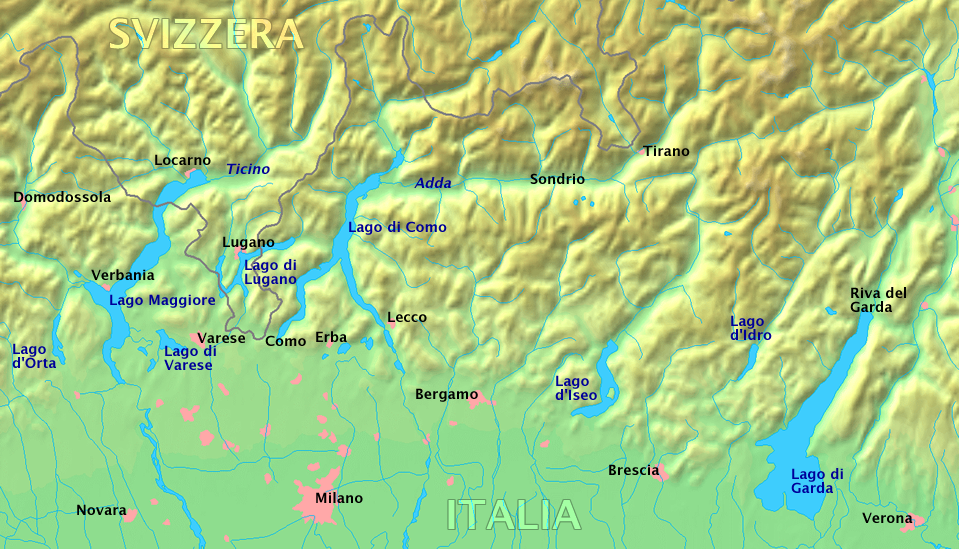
The northern Italian lakes, Garda, Como, Maggiore, Iseo, Orta, form one of the most photographed landscapes in the world and one of the most concentrated lake systems in Europe in terms of scenic quality. Each has a distinct character: Garda is the largest and the most swimmable. Como is the most aristocratic. Maggiore is the most Baroque. Iseo is the least known. This guide tells you how to see them all in 7-10 days without losing your mind over the logistics.
How do you want to see it?
Lombardy, ItalyCompare the same experience on GetYourGuide and Viator, save what you like to My Trip, share it, and book when you’re sure. Nearest to this page first.


The Italian lakes compared: character and vocation
| Lake | Region | Character | Best for | Ideal period |
|---|---|---|---|---|
| Garda | Lombardy/Veneto/Trentino | Swimming, sport, families | Water sports, families, cycling | May-September |
| Como | Lombardy | Luxury, beautiful villas, couples | Romance, historic villas, shopping | April-October |
| Maggiore | Lombardy/Piedmont | Botanical gardens, Baroque islands | Borromean Islands, gardens | April-October |
| Iseo | Lombardy | Authentic, less touristy | Authenticity, cycling, Montisola | April-September |
| Orta | Piedmont | Small, romantic, quiet | Couples, escaping tourism | April-October |

Lake Como: Bellagio, Varenna, and the villas
Lake Como is divided into a Y (the Como and Lecco branches meeting in the center of the lake), the most scenic zone is the "centro lago" between Bellagio, Varenna, Menaggio, and Tremezzo. Bellagio (CO) is the most famous village, expensive, much photographed, overcrowded in summer but impossible not to visit for the view from the tip of the promontory. Varenna (LC) is the more beautiful and less crowded alternative, the access is harder (only by boat or by train from Lecco) but the village is more authentic. Villa Carlotta (Tremezzo, www.villacarlotta.it, €12) has the most beautiful botanical garden on the lake (in April-May the bloom of the camellias and rhododendrons). Villa del Balbianello (Lenno, www.fondoambiente.it, €25 including the boat), the most famous private villa on the lake, the set of "Casino Royale" and "Star Wars Episode II". How to get around: the Lake Como ferry system (Navigazione Laghi, www.navigazionelaghi.it) connects all the villages, the daily "unlimited lake" ticket (€22 adults) is the most convenient way to explore.
Lake Garda: the northern sites at the foot of the Dolomites
Riva del Garda (TN) and Torbole (TN) are the destinations of the north side, the point where the lake narrows between mountains that drop almost vertically into the water and the regular winds (Pelèr and Ora) make this the European windsurfing and kitesurfing destination par excellence. The east side (Malcesine, Bardolino, Lazise, Peschiera) is more swimmable and more commercial. The west side (Gargnano, Limone sul Garda, Salò) is the most postcard-pretty and the most authentic, the villages of Gargnano and Toscolano Maderno have remained almost immune to mass tourism. The Fondazione Il Vittoriale (Gardone Riviera, www.vittoriale.it, €14), the villa-museum of Gabriele D'Annunzio, is the most eccentric and most Baroque home of a poet in Italy, a path among war theaters, relics, planes, and cannons that only D'Annunzio could have conceived.
Lake Iseo: the secret that Como's tourists don't find
Lake Iseo (BS/BG) has Montisola, the largest lake island in Europe by population (about 1,800 residents), reached by ferry from Sulzano (BS) and with no cars (only bicycles and service vehicles). Montisola has a rural lakeside quality of life that Como and Garda no longer have, the local fishermen sell the dried sardine (the "missoltino") that is the typical food product of the lake. The price of the restaurants on the island: 30-40% lower than Bellagio for the same quality. Iseo was the setting of Christo's installation "The Floating Piers" in 2016, the orange polyethylene platforms that let you walk on the water for 3 km between Sulzano and Montisola. The installation is dismantled but the lake has kept an international fame that still brings visitors.
Italian lakes: can you visit them in a day from Milan?
Lake Como: Como station is 40 minutes from Milano Centrale by train (€6-8), Como city is on the lake but the most beautiful part (Bellagio) is 1h by boat from Como. Lake Maggiore: Stresa is 1h20 from Milano Centrale (€10-13), the center of Stresa and the Borromean Islands can be visited in a day. Lake Iseo: Iseo station is 1h20 from Milan via Brescia (change), doable but it requires coordinated trains. Lake Garda: Desenzano del Garda is 55 min from Milan by train (€12-15), the south side of the lake in a day is doable. Advice: Garda and Maggiore are the most suitable for day trips from Milan for rail accessibility. Como is more beautiful but requires the boat for the best parts.
Italian lakes: Lake Como vs Lake Garda, which to choose for a week?
Como for: the absolute romance, the historic villas, the most cinematic mountain-lake landscape (the set of countless films), the high-level hospitality. It costs more than Garda at the high end. Garda for: the variety of experiences (water sports, beaches, villages, the Trentino mountains), families with children (more family-oriented services), cycle tourists (the Garda Bike Path is almost completed), the lower cost in the mid range. The practical choice: for a romantic week without children → Como. For an active week with families or a group → Garda. If you have 10 days → do both (4 nights Garda + 4 nights Como with a base at Varenna or Menaggio).

Related guides on ItalyPlanner.com
Italian nature Garda by bike Como's villas Romantic spots Como for Australians Lake camping Day trips from Milan Lake honeymoonPractical questions about Italy: what every traveler should know before leaving
How do the Italian ZTLs (Limited Traffic Zones) work and how to avoid the fines with a rental car
The ZTLs are the number-one source of nasty surprises for tourists with a rental car, cameras that read the plates and automatically send the fine to the rental agency, which passes it on to your credit card months after the trip. The main ZTLs to avoid absolutely: Florence (the entire historic center, almost always active, never enter the center of Florence by car). Rome (a ZTL with variable hours, some 24/7 in the historic center). Siena (the whole center inside the walls). Bologna (the T-Days Zone). The map of every Italian ZTL is available on Google Maps by searching "ZTL + city name", the Waze app flags the ZTLs in real time. Prevention is worth infinitely more than the appeal: a ZTL fine is almost impossible to dispute for a foreign tourist and arrives 2-3 months late on the credit card when you've already forgotten the trip.
How to deal with the acqua alta in Venice: what to do and what to expect when the city is flooded
The acqua alta (the phenomenon of the rising lagoon water level that floods the lowest Venetian streets) happens mainly in November-January, with peaks in October and February. The critical level: above 110 cm above sea level the problems begin in Piazza San Marco (the lowest in Venice). Above 130 cm a significant part of the historic center is flooded. The Venice Tide Center (www.comune.venezia.it/maree) publishes accurate forecasts 3-4 days ahead, the "Venezia Unica" app sends alert notifications. What to do during the acqua alta: the City installs the "passerelle" (raised wooden walkways along the whole main tourist route Station-Rialto-San Marco) that the Venetians use normally. Buy or rent rubber boots (sold in the newsstands and the shops of the center for €5-10) or waterproof your shoes with plastic bags. The acqua alta isn't an emergency, it's part of Venetian life, and seeing Piazza San Marco with 20 cm of reflected water is a spectacle that no "normal" day offers.
How do Italian trains behave in case of a strike: your rights and how to find out in advance
Transport strikes in Italy are common (on average 4-6 rail-sector strikes a year) but regulated by Law 146/1990, the essential services (regional trains in the peak hours 6:00-9:00 and 18:00-21:00, Frecciarossa and Frecciargento for the international routes) must be guaranteed even during the strike. How to find out: Trenitalia publishes the list of the guaranteed trains on the site www.trenitalia.com at least 5 days before an announced strike, the "Trenitalia" app sends notifications for the tickets you've already bought. Your rights during the strike: a full refund of the ticket if the train is canceled (even the non-refundable tickets) or the chance to reschedule the trip at no extra cost. In practice: Italian rail strikes rarely last more than 24 hours and almost never involve the High-Speed trains in the early morning hours, the 6:00-9:00 Frecciarossa trains almost always depart even during a strike.
How to find quality accommodation in Italy in the high-season weeks when everything seems sold out
The strategies that work: (1) Look in the towns 20-40 km from the main destination, Fiesole for Florence, Tivoli for Rome, Mestre for Venice, Sorrento for Amalfi; (2) Contact the hotels directly by email, some keep rooms for direct bookings not visible on Booking.com; (3) Agriturismo.it has places that the big OTAs ignore, at Ferragosto it's often the only option available at reasonable prices in the rural areas; (4) Airbnb often shows availability of private homes when the hotels are full; (5) The family-run B&Bs (1-5 rooms) have more variable availability than the chains, look for them directly on Google Maps filtering by "B&B + city name" with the most recent reviews.
8 things about Italy that surprise almost all foreign visitors
- In Italy the shops still close for the "afternoon rest", in many cities of the Center-South the businesses close from 13:00 to 16:30 or 17:00. In the North (Milan, Turin) the afternoon break in the shopping centers is now abolished, but in the small shops and the mid-sized cities it still exists
- Italian coffee at the counter costs €1-1.50 in almost the whole country, the cup of espresso is culturally protected from inflationary competition. Sitting at the table in a historic café costs 3-4 times more: it's the "table service" you pay for, not the coffee
- The escalators and the elevators in the Italian historic sites work with separately paid access systems, in Rome there are public elevators that go from Trastevere to the Janiculum (€0.50) and from the center to the Pincio (free on weekends). No guide mentions them but the Romans use them daily
- Authentic Parmigiano Reggiano (DOP) has the mark imprinted on the rind of the wheel, if you buy parmigiano in Italy and don't see the dotted mark on the rind, it isn't authentic Parmigiano Reggiano but "grana" or an imitation
- Black mulberries (Morus nigra) grow wild throughout rural Italy in June-July, the fruit falls on the roads and stains them dark purple. Eating them straight from the tree is one of the free pleasures of the country that no guide mentions
- Venice still has about 250,000 residents in the metropolitan area (including the mainland of Mestre) but only 48,000 on the historic island, the island population has fallen from 175,000 in 1950. In 2024 the City of Venice introduced the "access ticket" for visitors on summer weekends (€5 with a booking, €10 without)
- The Italian A1 motorway (Autostrada del Sole, Milan-Naples, 759 km) is the longest single-route motorway in Europe, it was completed in 1964 as the first infrastructure project of modern unified Italy
- Limoncello is technically native to the island of Capri, not to Sorrento or Amalfi, the three destinations have been contending the paternity for decades with no resolution. The documented original recipe is from 1988, when Maria Antonia Farace began producing it commercially on Capri
More Italy: curiosities, history, and advice for the prepared traveler
How to tell an authentic Italian restaurant from a scam one: the unmistakable signs
The signs of a low-quality tourist restaurant: a menu with photographs of the dishes (almost no quality Italian restaurant uses photos, the menus are written, period). Staff outside the door who "invite" passersby in (never a good sign in Italy). A menu in 8 languages with the exact same offerings; "pizza and pasta and tiramisù" as the only dishes of a cuisine that should be regional. A location on a main tourist square (Piazza Navona in Rome, Piazza della Repubblica in Florence, the cost of the rent pushes the prices up 40-60% compared to the neighborhood trattorias). The signs of an authentic restaurant: a menu handwritten or on a blackboard (it changes with the season). A mostly Italian clientele. Loose house wine in a carafe (almost always good and at €3-4). An appetizer not requested but brought automatically with the bread (in the trattorias of the South). The waiter who asks "where are you from?" with genuine curiosity, not out of duty.
How to get around the Italian neighborhood markets: the hours, the etiquette, and what to buy
The Italian neighborhood markets run from Monday to Saturday morning (7:00-13:00 in most cities), Wednesday and Saturday are the days with the most stalls in the medium-large cities. The etiquette of the Italian market: you don't touch the fruit without asking the seller ("may I?"), the seller chooses the product for you and this is normal, not a scam. You rarely haggle in the Italian markets (it's a more southern tradition than a Piedmontese or Lombard one). The prices at the Italian neighborhood markets are always lower than the supermarket for fruit and vegetables and comparable or higher for meat and fish. The most authentic markets by region: the Porta Palazzo market in Turin (the largest in Europe by area). The Sant'Ambrogio Market in Florence (the Florentines' favorite, near Santa Croce). The Ballarò market in Palermo (the most postcard-pretty in Italy).
How to use the Italian healthcare system in an emergency: emergency room, on-call doctor, night pharmacy
The Italian healthcare system is public and universal, in an emergency anyone is treated regardless of nationality and insurance coverage. The Pronto Soccorso (emergency room, PS): in any Italian hospital for emergencies, the single emergency number is 118 (ambulance) and 112 (all emergencies). The triage: the red code (life-threatening emergency) is treated immediately. The yellow code (urgent) within 30 minutes. The green code (non-urgent) can wait 2-6 hours. For non-emergencies: the Guardia Medica (116117) is the continuity-of-care service at night and on holidays, a doctor answers for free and can make a house call to the hotel. The night on-call pharmacy: every city has pharmacies that open at night on a rotation, the list is posted on the door of every closed pharmacy or search "farmacia di turno + city name" on Google Maps.
Italy at the table: 6 unwritten rules that tourists learn late
- Cappuccino is drunk only at breakfast in Italy, an Italian never orders a cappuccino after 11:00 and never after a meal. If you order it after dinner in an Italian restaurant, the waiter will bring it without saying anything but will find it strange
- Bread in Italian restaurants is paid for: the "coperto (fixed per-person cover charge)" (€1.50-3 per person) covers the bread and the placemat, it isn't a rip-off but a traditional menu item. In some regions (especially Tuscany) the bread is brought even without being requested as part of the coperto
- Italian tap water is drinkable in almost the whole country, asking for "acqua del rubinetto" (or "acqua naturale del rubinetto") is normal and money-saving. Only in some areas of Sicily and Campania does the water have an iron taste that makes it unpleasant even if drinkable
- Pasta is eaten with a fork without a supporting spoon, using the spoon to twirl the spaghetti is considered childish in Italy. If you don't know how to use the fork, ask "could you bring me a spoon?", they bring it without comment
- The "scarpetta" (using the bread to clean the sauce off the plate) is accepted and encouraged in the Italian trattorias, it's a compliment to the cook. Don't do it in a Michelin restaurant
- Tiramisù isn't the Italian national dessert, it's a recent invention (1960s, Veneto) and in the regions of the South it barely existed until the '90s. The truly national desserts you find throughout Italy: the panna cotta, the gelato, the torte della nonna (a regional variant), the dry biscuits with vin santo

