If you search "why visit Italy" on Google you find the same 10 things in every article: the food, the art, the climate, the fashion, the people. All true, but it is like describing the Divine Comedy by saying "it is a long poem." This guide tries to say something more precise and honest about what makes Italy truly different from any other destination in the world.
How do you want to see it?
ItalyCompare the same experience on GetYourGuide and Viator, save what you like to My Trip, share it, and book when you’re sure. Italy’s most booked first.


Reason 1: density, nothing is far from something extraordinary
This is the first thing that surprises those coming to Italy for the first time. From Rome, in 3 hours by train you are in Florence, Naples, Venice, or in the heart of Umbria. From Florence you are in the Cinque Terre, in Emilia-Romagna, in Tuscany in all its facets. In no other country in the world do you find such different landscapes, such distinct cities, such different cuisines at such short distances. Italy is smaller than California but holds within it the variety of a whole continent.
Reason 2: the food is truly different from what you have eaten abroad
Not because the Italian restaurants around the world are bad, but because authentic Italian food depends on specific, fresh, local ingredients that aren't exported. The San Marzano DOP tomato, the burrata of Andria made that morning, the bread of Altamura with the durum wheat of the Apulian Tavoliere, the prosciutto di Parma aged 24 months in the humidity of the Parma plain, these products have flavors not found outside Italy because the territory of origin is irreplaceable.
Reason 3: the architecture isn't in the museums, it is in the streets
In Italy you don't go to the museum to see historic architecture, you walk through any city and the architecture is everywhere. A 16th-century doorway in a neighborhood palace. A 13th-century fresco in the entrance of a pharmacy. A Roman mosaic under the floor of a medieval church. This visible layering, 28 centuries of building upon building, has no equivalent in the world.
Reason 4: the meal as ritual, Italian time changes the traveler
In Italy a lunch lasts at least 1h30, not because the service is slow (although it is) but because the meal in Italy is a social act, not a logistical one. The table isn't where you stock up on calories, it is the place where you talk, argue, laugh, resolve, celebrate. The tourists who understand this stop being frustrated by the slow rhythm of the restaurants and start enjoying it. Sunday lunch in an Italian family, 3 to 4 hours at the table with 5 to 6 courses and three generations, is a ritual of social cohesion that no other European culture preserves.
Reason 5: the South that 90% of tourists don't yet see
90% of foreign tourists visit 20% of the country, the Rome-Florence-Venice triangle plus the Amalfi Coast. The remaining 80% of the territory, Calabria, Basilicata, Molise, the inner Sardinia, the non-coastal Puglia, the non-tourist Sicily, is a universe that international tourism hasn't yet reached. The Calabria, the Molise, the inner Sardinia of today resemble the Matera of 15 years ago, when you slept for €50/night without finding queues.
Reason 6: the wine, geology in the glass
Italy has more than 2,000 native grape varieties, more than any other country in the world. The result: every region, every subregion, every micro-terroir produces a wine that exists nowhere else. The Barolo of Serralunga d'Alba is different from the Barolo of La Morra a few kilometers away. The Brunello di Montalcino of the Rennina is different from that of the Poggione 2 km away. This geological complexity in the glass, with 2,000 years more history than any other wine region in the world, is one of the most fascinating subjects of world oenology.
Reason 7: the language, music even for those who don't understand it
Italian has the highest percentage of vowels of any European language (46% of Italian phonemes are vowels) and almost no harsh consonant sound. This creates the characteristic musicality. The Sicilian, Venetian, Neapolitan, Piedmontese dialects are distinct languages that sound like Italian only superficially. A real argument in Neapolitan is like hearing music you don't understand but wouldn't want to stop listening to.
Questions and answers about why visit Italy
Why visit Italy and not another European country?
There is no single answer, there are personalized answers. Italy is the right choice if you have a passion for the art and history of the West (no country has this concentration of masterpieces), for gastronomy as a cultural experience (no country has the variety of Italian regional cuisine), for the beauty of the built landscape (the medieval villages, the countryside with the farmhouses). It isn't the right choice if you seek logistical simplicity and predictability, Italian bureaucracy, the ZTLs, the irregular rhythms can be frustrating for those used to Northern European precision.
Why visit Italy: what sets Italy apart from Spain or France?
France has the great codified cuisine, Impressionist art, the most advanced legal system in Europe. Spain has Modernist Barcelona, the Andalusia of flamenco, the Atlantic beaches. Italy has the densest historical layering, the most varied gastronomy, Renaissance and Baroque art as a national production spread across the whole territory. The deepest difference: Italy is fragmentary par excellence, it never had a unitary national identity until 1861, and this fragmentation is the source both of its political weakness and of its extraordinary local cultural richness.
Why visit Italy now?
One specific reason: Southern Italy is in a moment of tourist rebirth, Calabria, Basilicata, Molise are emerging as destinations before over-tourism reaches them. The optimal time to visit them is now, not in 10 years when they will be full of €300/night boutique hotels.
Will Italy disappoint me compared with my expectations?
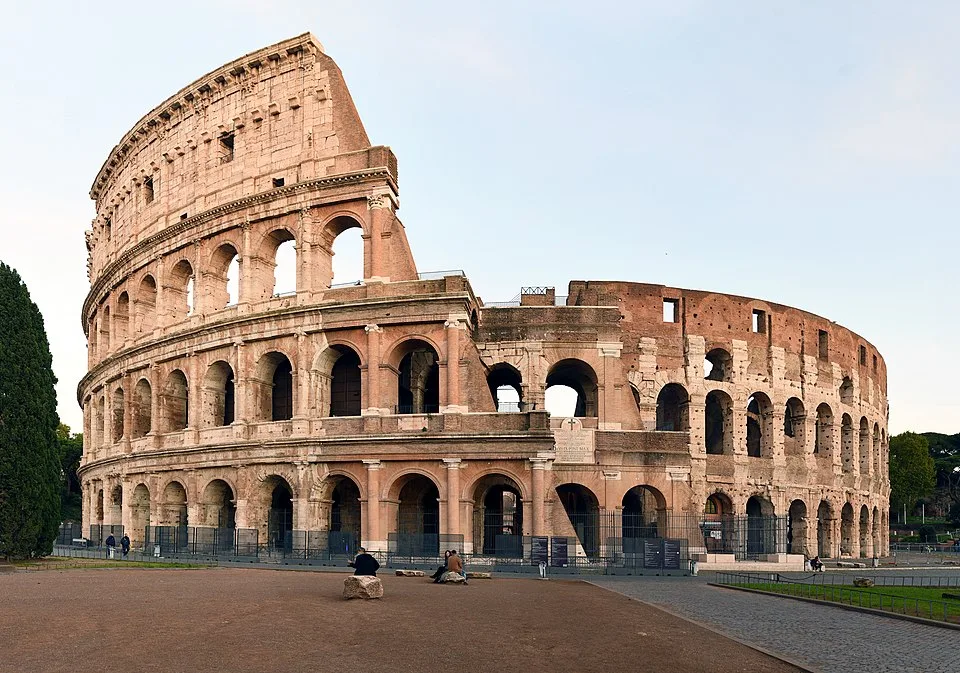
Italy disappoints the expectations based on postcards: the Venice gondola doesn't glide in romantic silence, there are 100 gondolas in line among the water taxis. The Colosseum doesn't have gladiators, it has queues of tourists with selfie sticks. But Italy always exceeds the expectations on the food, on the unphotographed landscapes, on the humanity of the Italians met outside the context of the tourist service. The trick: lower your expectations of the famous places and raise them on everything else.
Related guides on ItalyPlanner.com
First time in Italy How much does it cost to visit Italy Films to watch beforehand Italy vs Portugal Italy vs Turkey Italian food Rome: complete guide Italy for nature loversIn depth: what no tourist guide says about Italy
Authentic Italy, the one the tourist guides can't capture in its fullness, is made of lively contradictions. It is the country with the highest bureaucracy in Europe that invented la dolce vita. It is the country with chaotic traffic that produces the most beautiful mountain roads in the world. It is the country where the museums open when they feel like it but where the cuisine is as punctual as a Swiss watch. Those who manage to embrace these contradictions instead of fighting them, those who accept that the train is 15 minutes late as part of the landscape, that the waiter doesn't appear right away because it isn't lunchtime yet, find in Italy a hospitality and a beauty no normatively efficient country can offer. The frustration and the enchantment often come from the same source: Italy's refusal to be standardized.