How do you want to see it?
Sicily, ItalyCompare the same experience on GetYourGuide and Viator, save what you like to My Trip, share it, and book when you’re sure. Nearest to this page first.


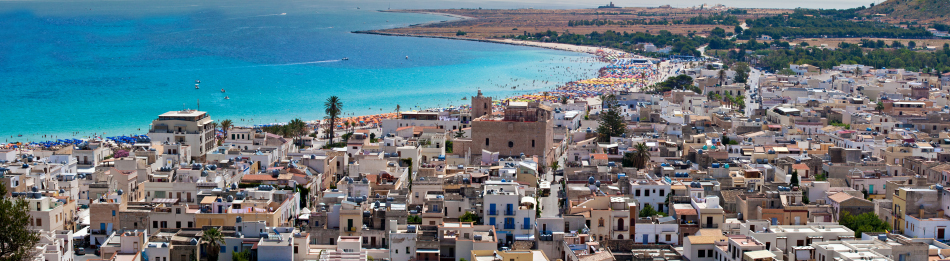

Best snorkeling beaches in Italy, the complete regional guide to where the water is actually clear
Italy's best snorkeling isn't at the famous tourist beaches, it is in the marine reserves where fishing has been prohibited for decades, allowing fish populations and coral to recover to densities that make the experience genuinely extraordinary. Lampedusa, the Portofino Marine Reserve, the Aeolian Islands, and Sardinia's La Maddalena are the reference destinations. Here is the complete regional guide.
What are the best snorkeling beaches in Italy and what makes each one distinctive?
Lampedusa. Isola dei Conigli (Rabbit Island): The Riserva Naturale Orientata Isola di Lampedusa protects the Conigli lagoon, an area of Posidonia oceanica (the endemic Mediterranean sea grass that oxygenates the sea and supports the fish ecosystem) visible through 10-15 meters of clear water. The sea floor here has the most complete Mediterranean marine ecosystem accessible by snorkeling anywhere in Italy. The loggerhead turtle (Caretta caretta) nesting site on the Conigli beach is one of the most important in the Mediterranean. The turtles are visible underwater June-September. Access: the beach is reachable by a 15-minute walk from the main Lampedusa beach or by boat taxi (€10 return). The beach itself requires paying a €5 reserve entry fee in season. Portofino Marine Reserve (Liguria): The Area Marina Protetta di Portofino covers the entire Portofino promontory, including the Punta del Capo and the Cala dell'Oro. The Christ of the Abyss statue (Cristo degli Abissi, placed at 17m depth in 1954, the original cast. Copies are in the Florida Keys and at other international marine reserves) is reachable by snorkeling with a dive mask and moderate breath-holding ability, visible from the surface in the bay of San Fruttuoso on clear days. 15m visibility on clear summer days. Ustica Marine Reserve (Sicily): Italy's first marine reserve (established 1987) around the volcanic island of Ustica (60km north of Palermo). The Grotta Azzurra (comparable to Capri's version but with better visibility and accessible by snorkeling), the Grotta delle Barche, and the Secca Colombara (a volcanic seamount at 35m depth, its top visible at 8-10m for snorkelers) make Ustica the most complete snorkeling destination in Sicily. The underwater volcanic rock formations (the same dark basalt as the Aeolian Islands) support a specific ecosystem of grouper, moray, octopus, and the endemic Ustica sea urchin. La Maddalena Archipelago (Sardinia): The Parco Nazionale dell'Arcipelago di La Maddalena protects 12 islands north of Sardinia. The Spiaggia Rosa (Pink Beach on Budelli Island, access restricted, no landing. Snorkel from boat in the surrounding water) and the Cala Coticcio on Caprera are the finest snorkeling sites. Granite boulders at sea level create the water clarity of the La Maddalena area, the fresh water springs from the granite create the natural filtering effect that makes the water here cleaner than anywhere else in Sardinia.
The Posidonia oceanica, the 100,000-year-old sea grass meadow that is Italy's most important marine ecosystem
Posidonia oceanica is a flowering plant (not an algae) endemic to the Mediterranean Sea, the endemic sea grass of the Mediterranean and one of the oldest living organisms on the planet. The Posidonia meadows (praterie di Posidonia) covering the Mediterranean shallow sea floor from 0-40m depth are the primary oxygen production system of the Mediterranean, the nursery habitat for 25% of all Mediterranean fish species, and a CO2 sequestration system storing carbon at rates comparable to terrestrial forests. The age: the Posidonia meadow at the Balearic Islands off Ibiza was dated by genetic analysis in 2012, the meadow had been growing continuously for between 80,000 and 200,000 years, making it possibly the oldest living organizm on Earth. The Italian Posidonia meadows around Lampedusa, the Pontine Islands, and the Sicilian coast are younger but still measured in thousands of years of continuous growth. The threat: Posidonia grows at approximately 1-6cm per year laterally. It is extremely sensitive to anchor damage (a single anchor dropped on a meadow creates a bare patch that takes decades to recover), water eutrophication (agricultural runoff), and invasive species (Caulerpa cylindracea, introduced from aquariums). The marine reserves that protect the best snorkeling in Italy (Lampedusa, Ustica, Portofino) derive their water clarity and fish density directly from the protection of the Posidonia meadows within them.

More Italy beach and water activity guides

